


Rock Paper Kingdoms
4.7174.00 Reviews
App Specs
- Version
- 0.2.1
- Updated On
- License
- Free
- Downloads
- 10,000+
- Developer
- TapHub Games
- Categories
- Strategy
- Platform
- Android
Screenshots
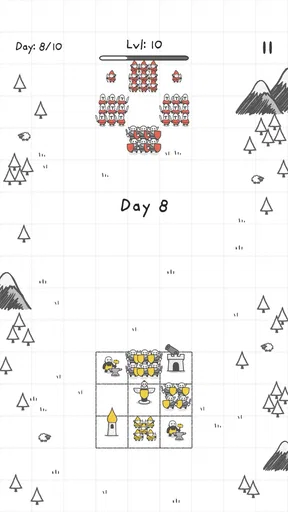
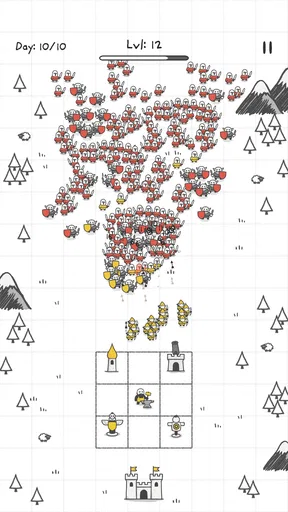
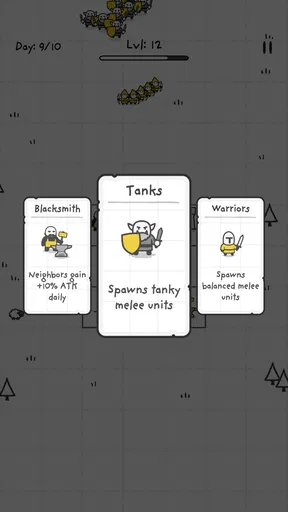
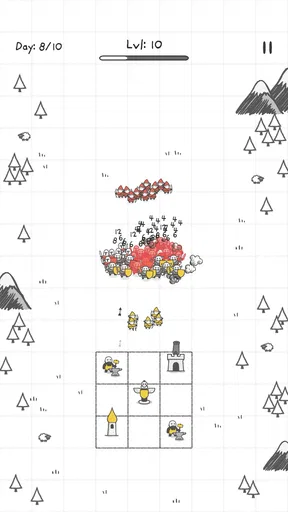
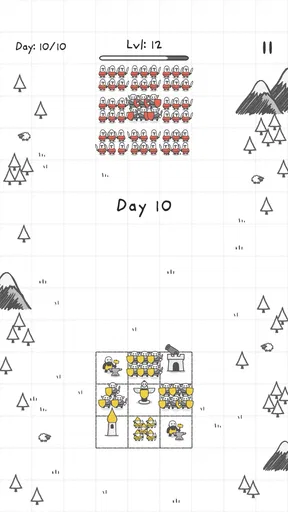
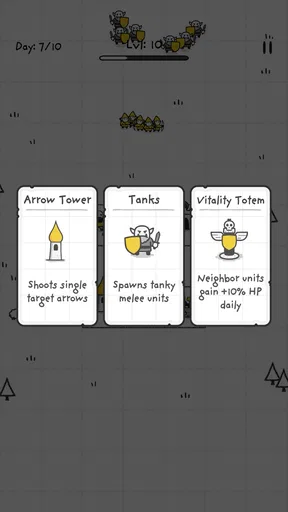
 Analysis by AppCompare
Rock Paper Kingdoms is a free strategy game from TapHub Games that turns a familiar hand-game idea into a small kingdom-defense challenge. I spent time with it to see whether the summon, upgrade, and defend loop has enough depth to survive beyond the first curious sessions. My early impression was positive: it is easy to understand, quick to start, and built around decisions that make each siege feel more active than a simple waiting game. The more important question, though, is whether those decisions remain interesting once the novelty wears off.
The game is aimed at players who enjoy short strategy sessions rather than huge maps, complicated economies, or a long tutorial before the first meaningful choice. Its store summary promises an army-building experience focused on stopping repeated enemy attacks, and that basic identity comes through clearly. I found it approachable enough for casual play, while still giving me reasons to think about what I summoned and when I spent upgrade resources.
Why the first week feels inviting
The strongest part of the opening experience is how quickly the central idea becomes readable. You are not asked to learn a dense rulebook before defending your kingdom. The rock-paper-scissors theme gives the battles an immediately recognizable logic, so even a player who rarely touches strategy games can understand why matching the right unit or choice to the situation matters.
That accessibility is valuable on a phone. I could pick it up for a brief session, make a few decisions, and put it down without feeling that I had abandoned a complicated plan. The game works best when I treat each siege as a compact problem: what do I have available, which threat deserves attention, and is this the right moment to improve my army rather than simply survive?
The summoning element gives the early game a pleasant sense of possibility. New additions make the army feel as though it is taking shape, while upgrades create a reason to revisit units that may have seemed ordinary at first. I liked that the basic theme encourages comparison instead of asking me to memorize dozens of unrelated abilities. The choices are easier to discuss in plain language: this option is useful against that one, but it may leave me exposed elsewhere.
That simplicity is also the source of the game’s first limitation. Players looking for a large tactical sandbox may find the opening rules too narrow. The appeal comes from making a small number of understandable choices, not from controlling every detail of a battlefield. If your favorite strategy games are built around enormous technology trees, diplomacy, or elaborate resource chains, this is likely to feel lightweight rather than streamlined.
The presentation is helped by the compact premise. A kingdom under siege gives every session a clear purpose, and the rock-paper-kingdom framing is more memorable than a generic collection of battles. I did not need a long narrative to understand what I was doing. That makes the game particularly suitable for someone who wants a strategy title that gets to its main loop without a lot of setup.
Worth Reading Before You Choose

Flipboard Shows What News Apps Must Do Beyond the Feed

Switching to Android Auto Means Rethinking Your Driving Routine

Google Calendar Makes a Crowded Week Easier to Manage

Ludo King Makes the Most of the Minutes Between Plans

Baby Panda World Brings Quick Play to Modern Phones, but Its Game Library Feels Busy

ESPN’s Live Game View Makes Following Close Games Easier
Its current version, 0.2.1, also matters when judging the first week. The game feels like an experience that is still finding its long-term shape rather than a massive, fully mature strategy platform. That is not automatically a problem; the focused design can be refreshing. It does mean I would approach it as a compact game to enjoy on its own terms, not as a replacement for a much larger strategy library.
A practical first-week routine
My advice for new players is to avoid treating every early resource as something that must be spent immediately. The temptation is to upgrade the first useful option and keep pushing forward, but the better habit is to watch which matchups repeatedly cause trouble. An upgrade that fixes a recurring weakness is usually more valuable than one that merely makes an already comfortable encounter slightly faster.
I also found it useful to pause mentally after a failed defense instead of blaming the random outcome or rushing straight into another attempt. Ask which decision created the problem: was the army too narrow, was an upgrade delayed too long, or was a strong response used against a less urgent threat? That small review turns a short session into actual practice and helps the game feel strategic rather than purely reactive.
For an everyday example, this is the kind of game I would play during a commute or while waiting for an appointment. I can make progress without reserving an entire evening, and the rules are simple enough to remember after putting the phone away. A player who wants a quiet, repeatable challenge in short bursts will probably understand the appeal within the first few sessions.
What remains valuable from month to month
The long-term value depends on whether you enjoy refining decisions inside a limited framework. Rock Paper Kingdoms does not need to become a giant game to remain worthwhile, but it does need its core choices to keep producing different problems. In my experience, the most durable part is the relationship between summoning and upgrading: building a stronger army is satisfying, but choosing how to make it stronger is where the strategy lives.
A useful way to preserve that interest is to stop measuring progress only by whether a siege was won. Try judging a session by how efficiently you handled a difficult matchup or how little you relied on emergency choices. This gives experienced players a personal improvement target even when the game is not presenting a major new system. It also prevents upgrades from becoming a purely automatic routine.
The game is a better fit for players who like gradual optimization than for those who need constant novelty. If you enjoy comparing options, noticing patterns, and adjusting a plan after a setback, the recurring loop can remain pleasant. If you expect a steady stream of new modes, story chapters, or dramatic mechanical changes, the compact design may lose its pull sooner.
Its public reception suggests that the concept is connecting with an early audience: the game holds a 4.7 average from around 443 ratings and has passed 10 thousand installs. Those figures make it look promising for a relatively young title, but they should not be mistaken for proof that it will suit every strategy player. A strong average can tell me that the central idea works for many people; it cannot remove the need to decide whether this particular pace and scale match my own habits.
The free entry point helps with that decision. I can try the game without paying upfront and discover whether the loop has enough texture for me. There are in-app purchases ranging from $0.99 to $49.99 per item, so players who prefer completely closed-off free experiences should pay attention to how they feel about optional spending before becoming deeply invested.
My preferred approach is to treat purchases as a boundary to decide in advance, not as a response to a frustrating siege. If I am enjoying the game, I would first ask whether a purchase adds meaningful convenience or simply shortens a challenge I could solve with better planning. That distinction is important in a strategy game: removing every obstacle can also remove the reason to keep learning.
Who gets the most recurring value
Rock Paper Kingdoms is particularly well suited to three kinds of players. The first is someone new to strategy games who wants clear cause and effect. The second is a mobile player who prefers sessions that can be completed in small pieces. The third is an optimizer who enjoys making a modest army more reliable over time instead of collecting a huge roster just for the sake of variety.
It is less suitable for someone who wants a social strategy experience, a large-scale kingdom simulator, or a deep competitive ladder. I would also hesitate to recommend it to a player who dislikes repeating a central defense loop. The game’s identity is concentrated, and that focus is a strength only if the basic loop itself is enjoyable.
Compared with a traditional tower-defense game, this feels less about placing a permanent maze of defenses and more about choosing the right response from an evolving army. Compared with a card battler, it appears more immediately readable and less dependent on building a complicated deck. Compared with a full kingdom-management game, it is much lighter: there is less overhead, but also less room for long-range planning outside the battle cycle.
That comparison explains the game’s best use case. I would choose it when I want a strategy-flavored break, not when I want to spend an hour designing an empire. It occupies a middle ground between a quick puzzle and a conventional defense game, with enough progression to encourage return visits but not the burden of maintaining a large campaign plan.
The maintenance burden of keeping it enjoyable
The game is easy to maintain from a practical point of view because its rules are compact. I did not need to keep notes or remember a complicated build order between sessions. The real maintenance burden is behavioral: I have to keep making deliberate choices instead of tapping through familiar responses.
That is where a simple weekly routine can help. Rather than playing until the loop feels stale, I would use short sessions with a specific purpose. One session can focus on identifying troublesome matchups, another on testing whether an upgrade solves that issue, and another on seeing whether the army remains balanced when the pressure changes. This keeps the game from becoming a mindless repetition of the same comfortable move.
Players should also keep an eye on the difference between progress and dependence. An upgrade is valuable when it opens a better answer or makes a weak part of the army dependable. It is less satisfying when it only encourages me to repeat the same action more quickly. Thinking in those terms makes the progression feel more intentional and helps reveal when I am playing from habit rather than interest.
The age rating is Everyone, which matches the approachable nature of the concept and makes it an easy recommendation for households looking for a light strategy game. Still, “Everyone” does not mean every player will enjoy the same level of repetition. Younger or newer players may appreciate the clear rules, while experienced players may want more complexity sooner.
The developer, TapHub Games, has positioned the title around a straightforward fantasy and a recognizable decision system. That gives the game a clean identity, but it also places pressure on future maintenance. For the experience to earn a permanent place on my phone, continued enjoyment has to come from meaningful choices rather than from simply having another small game installed.
Small habits that improve the experience
One useful habit is to separate “survival” upgrades from “comfort” upgrades. A survival upgrade addresses a threat that can actually end a run or repeatedly damage the kingdom. A comfort upgrade makes an easy situation faster or smoother. I would prioritize the first type, especially when resources are limited, because it improves the army’s reliability rather than only its speed.
Another is to avoid building an army around one favorite answer. The rock-paper-scissors foundation naturally rewards coverage, and a narrow collection can feel powerful until the wrong counter appears. Maintaining at least a practical response to different threat types is more dependable than over-investing in the unit or option that has performed best recently.
Finally, I would stop a session after a meaningful lesson instead of continuing through frustration. If I have identified why a defense failed, the next attempt may be useful. If I am simply repeating the same mistake, more time will not automatically create better strategy. This is a small point, but it matters for a game designed around frequent, compact returns.
Where fatigue starts to appear
The main risk is repetition without enough variation. A clear counter system is satisfying when it asks me to adapt, but it can become predictable if the same answers solve most situations. The first week benefits from discovery; later weeks need enough uncertainty or progression to keep those discoveries relevant.
I also noticed a possible tension between accessibility and depth. The game’s easy-to-read rules are one of its biggest advantages, yet they may limit the number of ways an experienced player can express skill. If I already understand the best response to each familiar threat, the remaining decisions may feel more like execution than strategy.
Upgrades can create a similar problem. Progression is motivating when it changes how I approach a siege. It becomes tiring when it is mainly a checklist that makes the same plan stronger. I would therefore judge the game by the quality of decisions after upgrading, not by the number of improvements available. A larger army is not automatically a deeper army.
The purchase range can also affect fatigue for players who are sensitive to monetization. Because the game is free to start, trying it is straightforward. The important personal question is whether the presence of items from $0.99 through $49.99 makes the experience feel comfortable or adds pressure to progress. I would recommend setting a spending limit before playing regularly, particularly for younger users or anyone who tends to buy when stuck.
Players who need a strong narrative reason to return may find the kingdom theme insufficient on its own. I enjoyed the clarity of defending a realm, but I was not playing for character drama or a large story arc. Someone seeking a campaign with extensive world-building would probably be happier with a story-driven strategy alternative.
There is also a difference between “quick” and “shallow.” Rock Paper Kingdoms is quick because it keeps the focus narrow. That does not make it empty, but it does mean the player has to bring some of the long-term goals personally. Improving consistency, experimenting with army balance, and resisting inefficient upgrades are self-directed challenges. If you want the game to constantly tell you what to chase next, it may not hold attention as well.
My long-term verdict
I think Rock Paper Kingdoms earns a place on a phone for players who want an approachable strategy game with a clear defense loop and short sessions. The free price makes it easy to test, the Everyone rating keeps the concept broadly accessible, and the combination of summoning, upgrading, and counter-based decisions gives the first week genuine appeal.
Its lasting value is more conditional. I would keep returning if I enjoyed improving an army through careful choices and treating each siege as a small optimization problem. I would uninstall it if I found myself repeating the same response without learning anything new. The game does not need to become a sprawling strategy simulator, but it does need to keep my decisions meaningful after the opening excitement fades.
For me, the fairest recommendation is to try it with a specific expectation: this is a focused mobile strategy game, not a full kingdom-management epic. Give the early battles enough attention to learn which weaknesses matter, spend upgrades with a purpose, and decide early how you want to handle in-app purchases. Those habits reveal the game’s strengths more clearly than rushing through the opening.
My final recommendation is simple: install it if you like compact tactical choices, light progression, and the satisfaction of finding the right counter under pressure. Skip it if you need deep economies, extensive stories, or constant new systems. Rock Paper Kingdoms is at its best when its small scale feels focused rather than limited, and whether it achieves that over the long term depends on how much enjoyment you get from refining the same core idea.
Pros
- Simple controls make matches easy to learn for new players.
- Short rounds fit well into quick gaming sessions.
- Kingdom progression adds a sense of long-term advancement.
- Colorful visuals give the game a friendly
- accessible style.
- Different strategic choices keep matches from feeling completely repetitive.
Cons
- Progress may feel repetitive after extended play sessions.
- Some features can take time to unlock without consistent play.
- Luck can influence outcomes alongside the player's strategy.
- The interface may feel crowded on smaller phone screens.
- Limited depth may disappoint players seeking a complex strategy game.
FAQs for Rock Paper Kingdoms
What is Rock Paper Kingdoms?
Rock Paper Kingdoms is a strategy game built around the familiar rock-paper-scissors concept, expanded with kingdom management, battles, and progression systems. Players typically make tactical choices, develop their forces, and compete against opponents while trying to counter enemy units effectively. Its appeal comes from combining simple rules with strategic planning, making it accessible to beginners but increasingly demanding as the kingdom grows and battles become more complex.
How does the combat system work in Rock Paper Kingdoms?
Combat is based on choosing units or actions that counter one another, following the rock-paper-scissors relationship. A successful decision can give you an advantage, while selecting the wrong counter may leave your forces vulnerable. Although the basic mechanic is easy to understand, timing, unit selection, upgrades, and reading the opponent’s strategy become important during more advanced encounters. The game rewards thoughtful decisions rather than random tapping.
Is Rock Paper Kingdoms free to download and play?
Rock Paper Kingdoms can generally be downloaded without an upfront purchase, allowing players to try its core gameplay before spending money. However, availability of advertisements, optional in-app purchases, premium currency, or progression boosts may depend on the version and platform. Before downloading, it is worth checking the official store listing for current pricing details, supported payment options, and whether purchases are required to access particular features.
Can I play Rock Paper Kingdoms offline?
Some parts of Rock Paper Kingdoms may be available without a constant internet connection, especially basic kingdom management or selected single-player activities. Nevertheless, online access may be required for account synchronization, advertisements, updates, competitive modes, event content, or multiplayer features. If offline play is important to you, check the game’s latest store description and test which modes remain accessible after temporarily disabling your connection.
Is Rock Paper Kingdoms suitable for children and casual players?
Rock Paper Kingdoms is relatively easy to start because its central rock-paper-scissors mechanic is familiar and straightforward. Casual players can learn the basics quickly, while strategy fans may enjoy optimizing units, upgrades, and battle decisions over time. Parents should still review the age rating, advertising policy, chat or social features, and in-app purchase settings, since these details can vary between Android and iOS versions and may change with updates.


